



Recently, I got the chance to catch up on “Welcome to Wrexham,” the FX series that follows the actors Ryan Reynolds and Rob McElhenney as they try to revive a storied Welsh soccer club that had been locked in the basement of the English soccer pyramid for more than a decade.
Reynolds and McElhenney bought Wrexham AFC in 2021 and soon began documenting their ownership journey with a film crew. Each season of the resulting television series focuses on a single Wrexham soccer season. Early on, the team was so obscure that one could watch the docuseries season without having any idea how the team had performed during the preceding season. That was a good thing for fans of the show. After all, Reynolds and McElhenney’s stated goal was to elevate the team out of the depths of English soccer, and thus the team’s performance each season became the central tension of the show. However, the American ownership duo has been so successful at their goal—the team now plays in the second-tier Championship league—that fans of the show are facing a peculiar problem. Now that the team plays in a league regularly televised live in the United States, Yankees like me must decide whether to watch matches live, or whether to try to avoid “spoilers” until the next season of “Welcome to Wrexham” comes out. In short: Do we want to be fans of the soccer club? Or fans of the TV show?
All of this got me thinking about another sports-related documentary series I watched recently, Netflix’s “Mr. McMahon,” which tells the story of the pro-wrestling company WWE and its longtime chief executive, Vince McMahon.
Those subjects—the WWE and McMahon—are two separate, but highly intertwined, stories. The McMahon side of the docuseries deals with important issues around McMahon’s alleged behavior and management style. However, in this post I want to focus on the WWE side of the documentary.
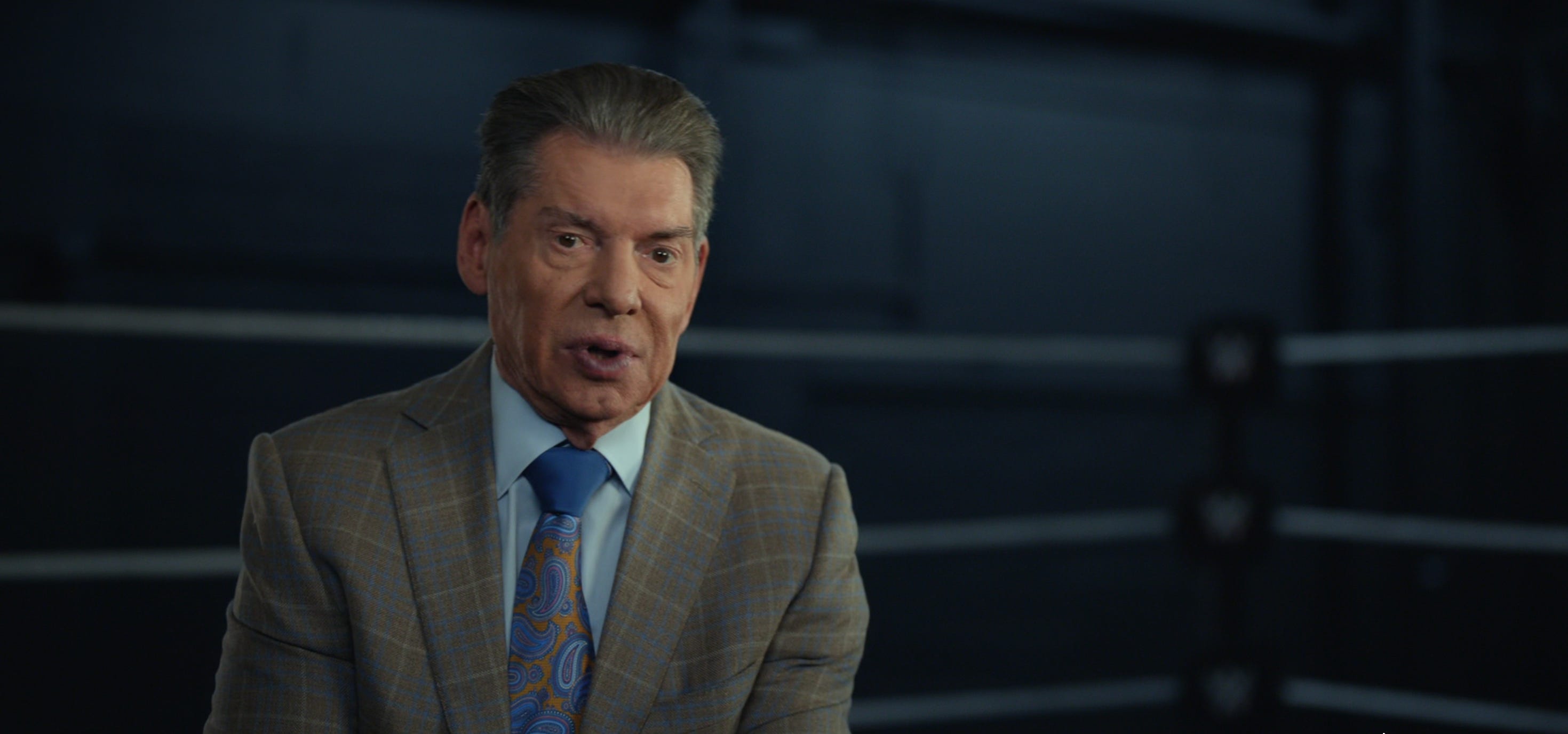
What the WWE story makes clear is that fans, and the wrestlers themselves, care passionately about the shows WWE puts on. Each WWE event is driven by a carefully orchestrated story line, even if the exact details of what happens in the ring are sometimes unplanned or unexpected.
Central to those story lines is the concept of “heels.” These are the characters who are chosen to be the villains, the “bad guys.” They make it possible for the good guys to triumph over evil, even though sometimes the good guys later end up becoming heels themselves.
As “Mr. McMahon” shows, wrestling became a major phenomenon in the American entertainment scene, but it has also faced a series of ups and downs. At the moment, the WWE is at a high point. It brought in a record $391.5 million in revenue in the first quarter of last year, which coincided with the debut of its flagship program, “WWE Raw,” on Netflix. In the third quarter of 2025, the WWE’s revenues topped $400 million.
What struck me about “Mr. McMahon” is how little time the series spends on the question that is probably most commonly raised with regard to WWE: Is it real? The docuseries takes for granted that fans of WWE know it’s staged.* The only people fixated on the “Is it real?” question are those who are not fans of the show, and who don’t understand why people watch it.
I remember in high school going to a friend’s house and watching professional wrestling with him and his family. His family loved it; I didn’t get it. I was hung up on “proving” it was fake, and so I missed the point entirely.
The point—what Vince McMahon understood earlier than most others—is that while the matches and their outcomes are important raw materials in producing entertaining sports-related programming, those raw materials can be greatly enhanced by focusing on story lines. It might be exciting for Wrestler A to throw Wrestler B out of the ring and onto a chair, but it is far more exciting if Wrestler A is the hero everyone is rooting for, and Wrestler B is the villain who is finally getting his comeuppance.
While the WWE has never openly advertised that its matches are staged, the league also knows that the means by which the outcomes of its matches are determined are far less important than the way its matches are presented; the story lines matter, the veracity of the matches does not.
The booming sports-media world has learned this lesson, too. It’s not just “Welcome to Wrexham.” Scroll through ESPN’s streaming library and you’ll find a long list of sports docuseries, not to mention an almost endless stream of sports talk shows that spend far more time on the human drama of sports than on strategy or game recaps.
I’ll leave it to the sports writers and TV critics to decide whether all of this is good or bad for sports. Instead, I want to focus on what all this says about sports as a commodity.
McMahon was certainly not the first person to realize that sports is a commodity. It is unlikely that sports broadcasting would have ever become a multitrillion-dollar industry if sports broadcasts were simply fact-based descriptions of on-field action.
However, McMahon was among the first to appreciate—and to exploit—just how cheap a commodity athletic endeavor could be. In his version of commodity exploitation, he took very strong men and women and had them play-act outlandish feats of strength on camera. And that’s all he needed. He did not need to have true fighting; he didn’t need true winners and losers. He just needed a whiff of competition from people who looked strong. From there, he could craft highly compelling television.
“Welcome to Wrexham” and the parade of similar sports docuseries perform a parallel act of resource exploitation, albeit by drilling the well of legitimate athletic competition. These shows invert the traditional sports broadcast: instead of showing all of the plays in a game and then garnishing the broadcast with color commentary and insider insights, these series focus on insider drama and season it with only the most consequential highlights from games. Instead of needing 90 minutes of match play to produce a program, they manage to build an entire sports program with just 3 or 4 minutes of actual play—and sometimes even less than that.
Should we care? Should we be offended? I don’t know. Maybe?
However, I think this helps explain one final phenomenon we are seeing: the rise of the sports influencer. Athletes have long been given lucrative sponsorship deals, but as it becomes clearer and clearer that sports is a cheap commodity, athletes are increasingly beginning to assert their right to exploit the commodity themselves. The most obvious example is college athletes finally demanding payment for the use of their names, images, and likenesses, but this also extends to athletes like the Kelce Brothers and Sophie Cunningham, who have each launched podcasts. Many will see the latter as simply an extension of influencer culture; and it certainly is that. However, what makes athlete influencers unique is that the resource they use to get their ventures off the ground is their high-profile athletic abilities. Like any business, their side careers will succeed or fail based on a variety of factors, including talent, grit, and business savvy; but their seed capital is their athletic performance.
There’s a mid-sized coffee chain here in the upper midwest that makes a variety of coffee-themed drinks, almost none of which contain the discernable taste of coffee. It’s very popular, though. I joke that it’s a coffee shop for coffee lovers that don’t actually like the taste of coffee.
As with WWE, since “Welcome to Wrexham” debuted, there have been plenty of news articles making archaeological attempts to discern which facets of the show are “real,” and which are contrived. However, such questions imply that, if it turned out that the behind-the-scenes conflicts or dramas depicted on the show were embellished, viewers might tune out. I don’t think that’s true.
Rather, “Welcome to Wrexham” is a reflection of the reality that sports media does not need to have much to do with sports in order to be profitable. “Welcome to Wrexham” is simply an example of a sports-themed television show that can attract “sports lovers,” even if those “sports lovers” don’t actually like watching sports.