


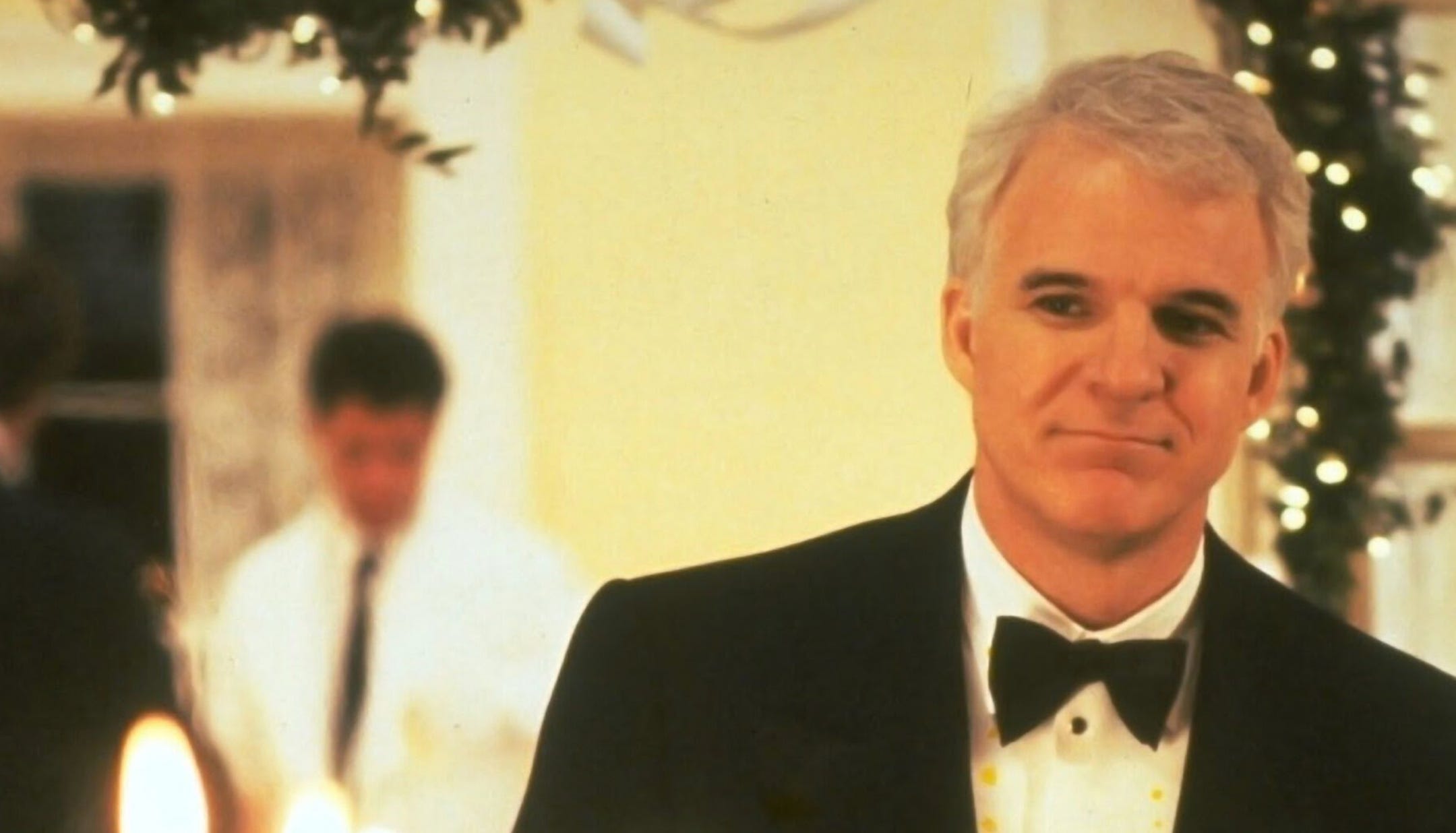
“Father of the Bride” does not have a happy ending.
I know it’s a romantic comedy, and thus by definition it should. But it doesn’t. And you can’t change my mind.
Allow me to explain.
In one of my proudest parenting maneuvers, I somehow tricked my two kids into a tradition of watching 1990s-era family movies whenever my wife is out of town. Over the years, we’ve gone through all the greatest hits: “Mrs. Doubtfire,” “The Parent Trap,” “The Mighty Ducks,” “Cool Runnings,” and “Blank Check.”
Last night, though, we turned to "Father of the Bride.” The 1991 film has a talented cast including Diane Keaton, Martin Short, and Keiran Culkin, but the heart of the story is the relationship between the father, played by Steve Martin, and his 22-year-old daughter, played by Kimberly Williams.
Williams’ character, Annie, returns home from studying abroad to announce that she has met the love of her life—Bryan, played by George Newbern—and is engaged to marry him. Martin’s character, George, proceeds to lose his mind over everything from the cost of the wedding to the annoying way hot dogs are sold in packs of eight while buns are sold in packs of 12. The main thing that drives him bonkers, though, is the very premise that his daughter is getting married in the first place.
The movie is funny and heartfelt. There are plenty of classic Steve Martin hijinks, and Short adds an almost-too-weird level of comic absurdity as the bizarrely accented wedding planner, Franck. George alienates his family by complaining too much and trying too hard to cut costs (perhaps some guests can be told not to eat, he suggests). Annie and Bryan get into a fight that leaves Annie wanting to call the whole thing off. George saves the engagement after finally realizing that Bryan is actually a good guy and a good match. Then comes the wedding itself, which Franck pulls off without a hitch, despite George skimping on the number of parking attendants. Annie and Bryan go on their honeymoon to live happily ever after.
But the movie doesn’t have a happy ending.
Let’s examine the closing scenes. With the wedding complete and the reception nearing its end, George takes a moment to catch his breath and allows himself a smile at how well everything turned out. Then the emcee announces that Annie is about to toss her bouquet, after which she and Bryan will immediately depart on their honeymoon.
“This, I was not going to miss,” says George, the film’s narrator.
To get to the staircase where Annie will toss the flowers, though, George needs to make his way across a crowded room. He decides to take a shortcut. Predictably, his shortcut backfires and he arrives in the foyer just in time to see the door close behind the newlyweds.
“She was gone. My Annie was gone, and I was too late to say goodbye,” George narrates.
Later that evening, as George and his wife recount the day, they lament the missed connection.
Then the phone rings. It’s Annie, calling from an airport pay phone.
“Our plane’s about to take off, but I couldn’t leave without saying goodbye,” she says.
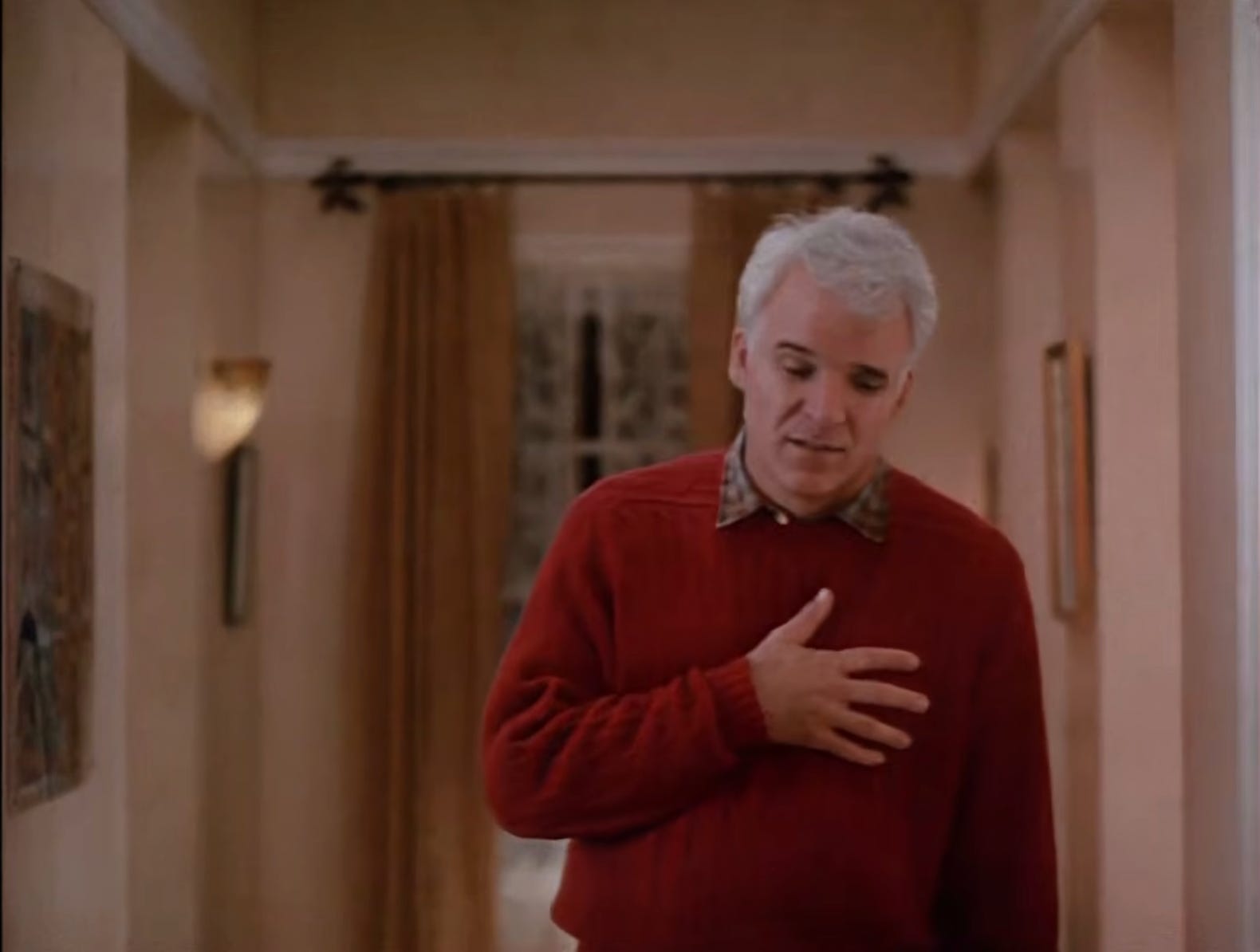
Because it’s a rom-com, you knew the movie would not end without George getting his goodbye. The phone call is satisfying to the viewer. Yet, as George hangs up the phone, he can only muster a fake half-smile.
“Father of the Bride” is a story of transition, but more than that, it’s a story of loss. George has always had a certain relationship, a certain stature, with his daughter, and now all of that’s changing. And it won’t change back.
No matter how normal or necessary George’s loss is, it nonetheless remains a loss.
And that’s what makes this movie so perfect, and so timeless. At every point, the movie resists the temptation to make it all alright. Normally, the sign of a well-drawn character is that the character changes over time. He grows and develops. What makes George a well-drawn character, though, is that he doesn’t change.
Mid-way through the movie, George discovers Annie asleep on the sofa with a magazine splayed open across her chest. He picks it up and sees that she’s been reading an article about how to have a wedding on a small budget. The tips include sacrifices like hiring a tailor to copy a designer dress and making the wedding cake yourself. George realizes his negative attitude is ruining his daughter’s big day.
“From that point on, I decided to shut my mouth and go with the flow,” our narrator declares.
And perhaps it’s true that he bites his tongue a bit more after that, but he doesn’t change. He’s still a curmudgeon. He still gets visibly annoyed at every exorbitant expense. At every perceived slight. He still kicks and screams as he’s dragged inexorably toward the fate that he only ever accepts because he knows he cannot avoid it. The movie is not about George changing; it’s about changes happening around George whether he likes it or not.
Which brings us to that phone call at the end of the film. Sure, it’s seems like the happy ending, but it’s more like a consolation prize.
Think about it: The father, harried and exhausted after equally traumatic wedding bells and wedding bills, sprints through what he thinks will be the fastest route to seeing his daughter throw her wedding bouquet, only to completely miss her. She doesn’t wait for him. Doesn’t turn back as she walks out the door. Doesn’t stop the car as they’re driving down the road and then run down the street to hug her dad. She does none of that.
And of course she doesn’t. She’s wrapped up in her own wedding, in her new life. She’s thankful to her father and she calls him to tell him so. But she cannot and will not pause her wedding day just because her father is having a hard time processing it all. That’s not how life works.
It’s not uncommon these days for films to leave the viewer with an unnerving twist or an unhappy ending. Sentimental is out; unsettling is in. What makes “Father of the Bride” so timeless is that it succeeds at depicting an unsettling moment in life while still maintaining its sentimentality. It stares straight into the face of something both good and hard and refuses to diminish either its goodness or its difficulty.
It’s a very good movie with a very good ending.
But it’s not a happy ending.