


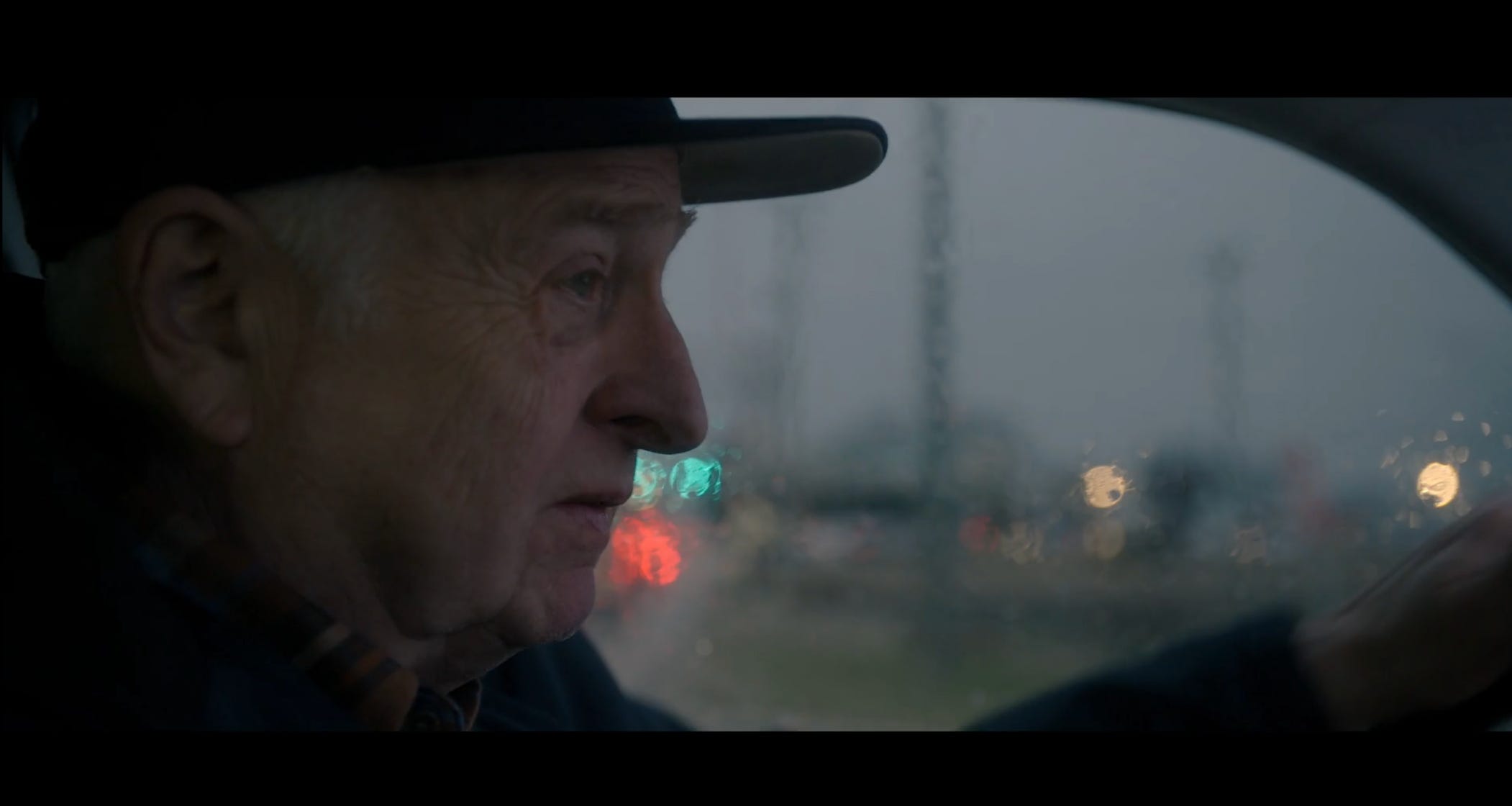
“I’m very worried about what’s going to happen with corruption in small-town America, because corrupt people will always run for office.
But we have to stand up to them.
We have to go after them.”
Those are the haunting words of Bruce Willingham, the owner and publisher of The McCurtain Gazette-News, in the new documentary “Kill. Bury. Print.,” which debuted on Peacock late last month.
The Gazette is a small, thrice-weekly newspaper in rural southeastern Oklahoma. Willingham and his wife, Gwen, bought the paper in 1988 and have been running it ever since. Their son, Chris, grew up around the newspaper and became its police reporter. Chris’ wife, Angie, was the copy editor.
The paper has a circulation of about 4,400 copies, and for nearly four decades now the family has dropped everything to make sure the paper goes out on time each morning. It’s just what they do.
The cynic in me wonders if all that is necessary. After all, would it really matter if the newspaper came out a few hours late one day? Would it really matter if it did not come out at all?
That’s the underlying question of “Kill. Bury. Print.” And the film has a very direct—and very disturbing—answer.
The tension in the film begins with a local sheriff election. In 2016, a local man named Kevin Clardy won the election to become the McCurtain County’s new top law enforcement officer. Clardy had more than 20 years of law enforcement experience and had previously been an undersheriff in the county. Thus, the change in sheriff regimes initially seemed rather seamless.
Soon, though, Chris and Bruce Willingham started to hear concerns from insiders at the sheriff’s office. A subordinate, Alicia Manning, began rising through the ranks of the department as rumors of an affair between her and Clardy swirled. Then, a photo emerged showing the department’s evidence locker in disarray.
For those who have never worked the “cop shop,” a police reporter typically visits local law enforcement offices on a daily basis to look through police reports from the past 24 hours. Yes, many police and sheriff’s departments put out press releases for major cases, but no police reporter worth his notepad relies solely on press releases. For one, the police could omit unflattering cases from their press releases. For another, sometimes a quirky story doesn’t seem newsworthy to the police but turns out to be highly interesting to the general public. A good reporter can spot such cases. Most importantly, though, those daily visits to the police station give reporters the chance to chat with law enforcement officers. Those relationships are invaluable to reporters.
Chris Willingham had always had a strong working relationship with the sheriff’s office, but when the newspaper began to report on Clardy’s apparent mismanagement, Willingham’s access and his relationship with the department quickly evaporated.
Things got so bad that at one point the sheriff’s department began to investigate potential links between Chris Willingham and a convicted pedophile. The attempts to paint Chris Willingham as a child abuser fizzled after the local prosecutor found there was insufficient evidence to move forward. However, the investigation was devastating to Chris Willingham, making it difficult for him to leave his house and driving him to contemplate suicide. Eventually, he decided to relocate his family to another city in Oklahoma.
The reason there’s a documentary about the Willinghams, though, is because of a different rumor. Bruce Willingham had heard — and strongly suspected — that county commissioners were conducting official business after publicly adjourning meetings. Conducting county business out of public view is a violation of open meetings laws, and Bruce Willingham decided to put an end to it.
In early 2023, he consulted a lawyer and then purchased a voice-activated audio recorder that looked like a ballpoint pen. Without even testing the pen, he decided to leave it in a pen cup at the county commissioner’s chambers after a public meeting had ended.
When he checked the recording later, he got more than he bargained for. Clardy, Manning, jail administrator Larry Hendrix, and McCurtain County Commissioner Mark Jennings were recorded discussing a range of topics, but two stood out. They discussed lynching Black people and hiring a hit man to kill the Willinghams.
Jennings suggests that he knows hit men, who are “very quiet guys.” He also offers a couple of “deep holes” that presumably could be used as graves.
The Gazette duly reported on their recording. The paper did not even have a website or social media presence at the time, so they uploaded the recording and put a giant QR code on the front page so readers could hear for themselves.
The story quickly went viral. The governor called on the officials to resign. And soon, though not immediately, both Jennings and Clardy were out of office.
So, a happy ending and a victory for local journalism, right?
Well, kind of.
What makes “Kill. Bury. Print.” so unsettling is that it was not an unequivocal win for the newspaper. Jennings resigned, but Clardy did not. He only left office in 2024 when he lost the primary in his re-election bid, getting only 18% of the vote in a three-way race.
Still, the newspaper itself arguably lost more than Clardy did. Chris Willingham no longer felt safe reporting in his own hometown, leaving the newspaper to be run by his aging parents. Beyond that, nothing in the film suggests that the newspaper’s heroic coverage resulted in any kind of financial boon. In fact, it suggests the opposite.
“The paper doesn’t make any money,” says Chris Willingham near the end of the film. “This is truly a passion project.”
It’s not an easy time to be in the newspaper business, even if you’re great at it. Just this week, Northwestern University’s Medill School of Journalism reported that 170 local newspapers went out of business in the past year, creating 26 new “news desert” counties. Altogether, Medill says there are now 238 “news desert counties” in the country. That number does not include places like northwest Iowa, where I live, where the once-robust midsize-city dailies have now largely been taken over by giant news conglomerates that have slashed their newsrooms to the point where their news staffs barely outnumber the staff of The Gazette.
The fact that Bruce and Gwen Willingham continue to operate their newspaper is likely due to two things: prudent management and a journalistic spite. No publisher is going to let a corrupt local politician drive him or her out of business.
Of course, it doesn’t take bullying from local officials to kill local newspapers. The theft of intellectual property by social media and artificial intelligence companies, the decades-long smear campaign against fact-based journalism, and the complacency of the smartphone-addled public are more than enough to drop local newspapers in one of those deep holes Jennings described.
And that brings me back to the quote I began with. I suspect Bruce Willingham is correct that corrupt people will never be able to resist the urge to run for office. Big-city newspapers and local TV reporters can sometimes catch on to corruption in little-noticed corners of little-noticed states. But for the most part, it’s only local newspapers — those family-run, shoestring-budget, don’t-even-have-a-website dinosaurs — that have the local presence, neighborhood know-how, and downright gumption to spot corruption and expose it.
That, alas, is the ultimate lesson of “Kill. Bury. Print.” Local corruption and strong local journalism cannot coexist. It’s up to the public to decide which one thrives and which one gets buried.